-
Expertise
Civil Infrastructure Engineering, Electrical Engineering, Geotechnical Engineering, Highway and Bridge Engineering
-
Location
Johor Bahru, Malaysia
-
Client
IJM Construction Sdn. Bhd.
-
Completion Year
Construction In Progress
-
Estimated Project Value
RM 400 Million
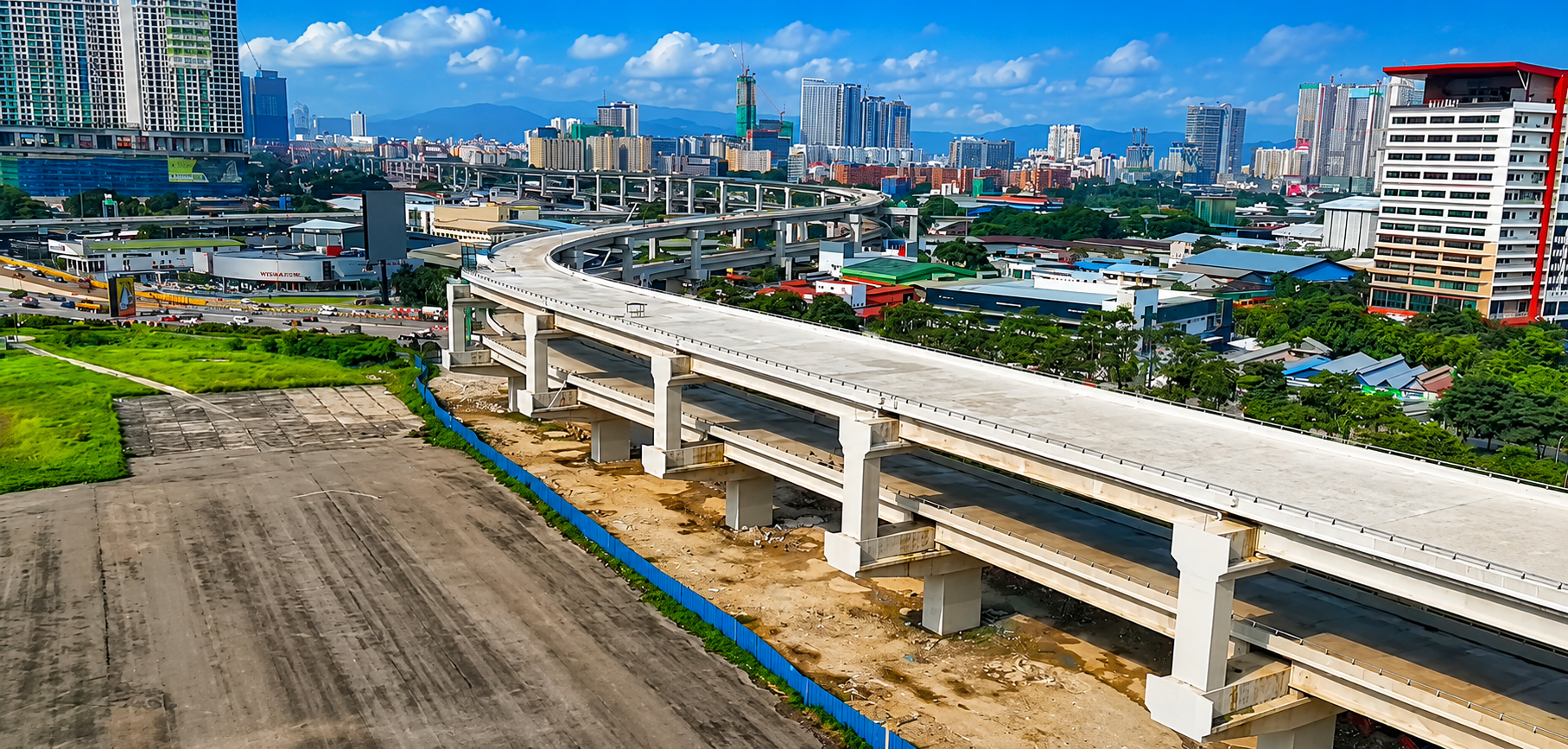
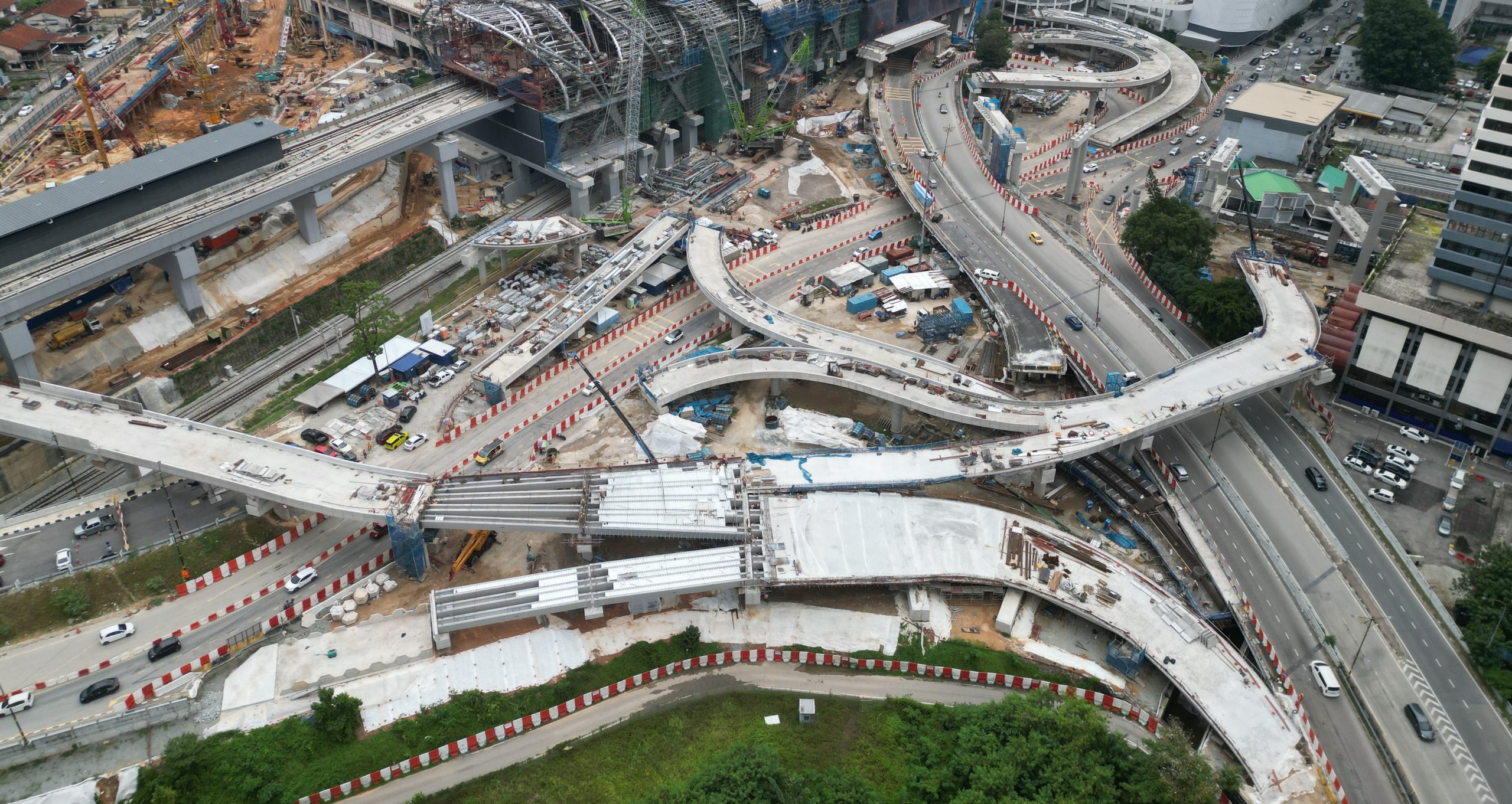
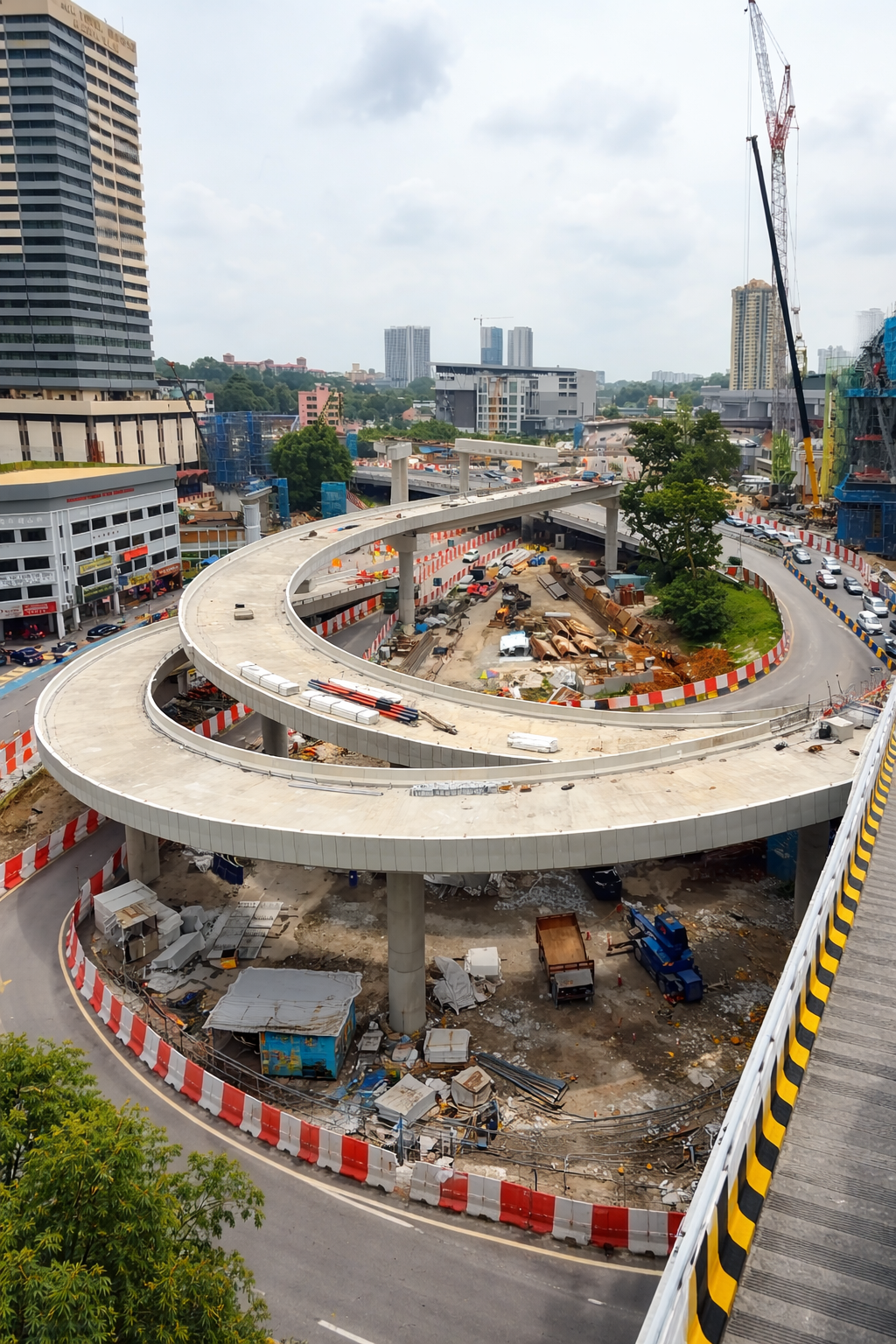
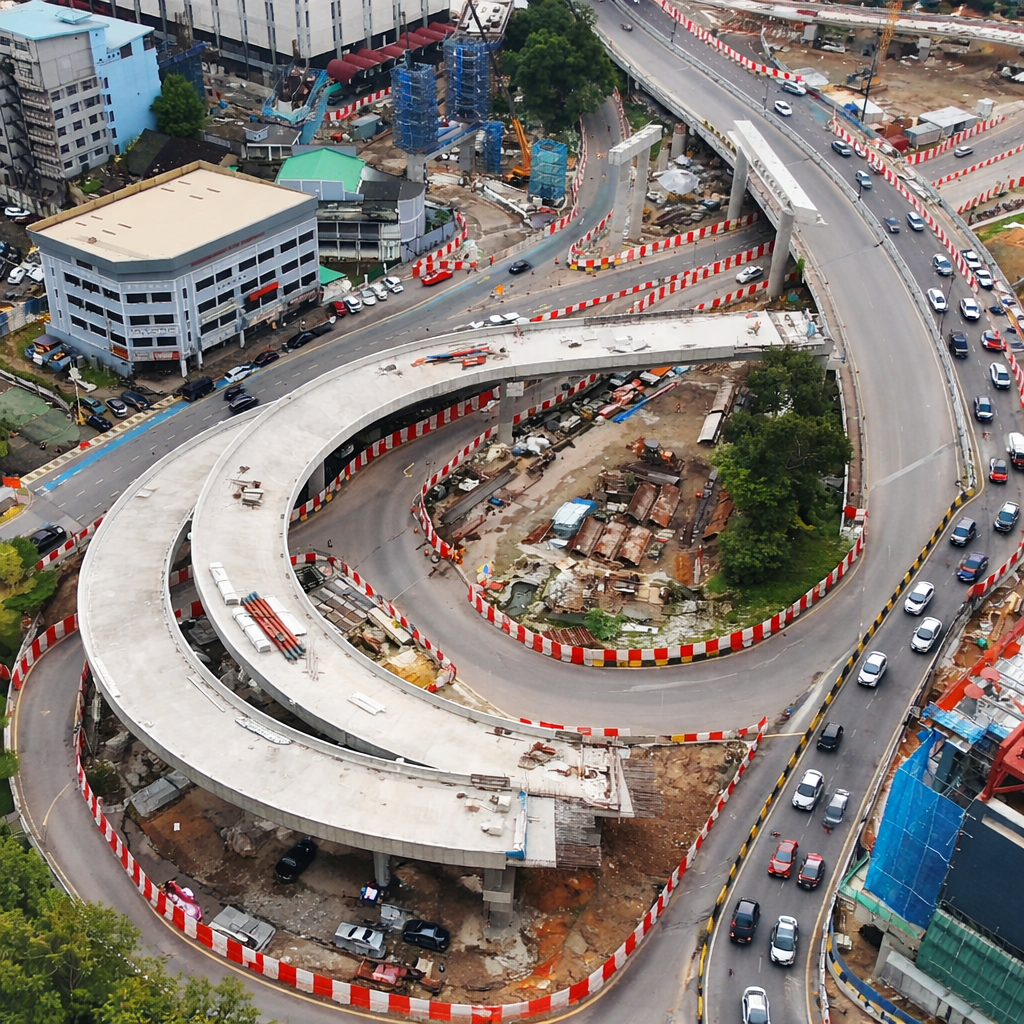
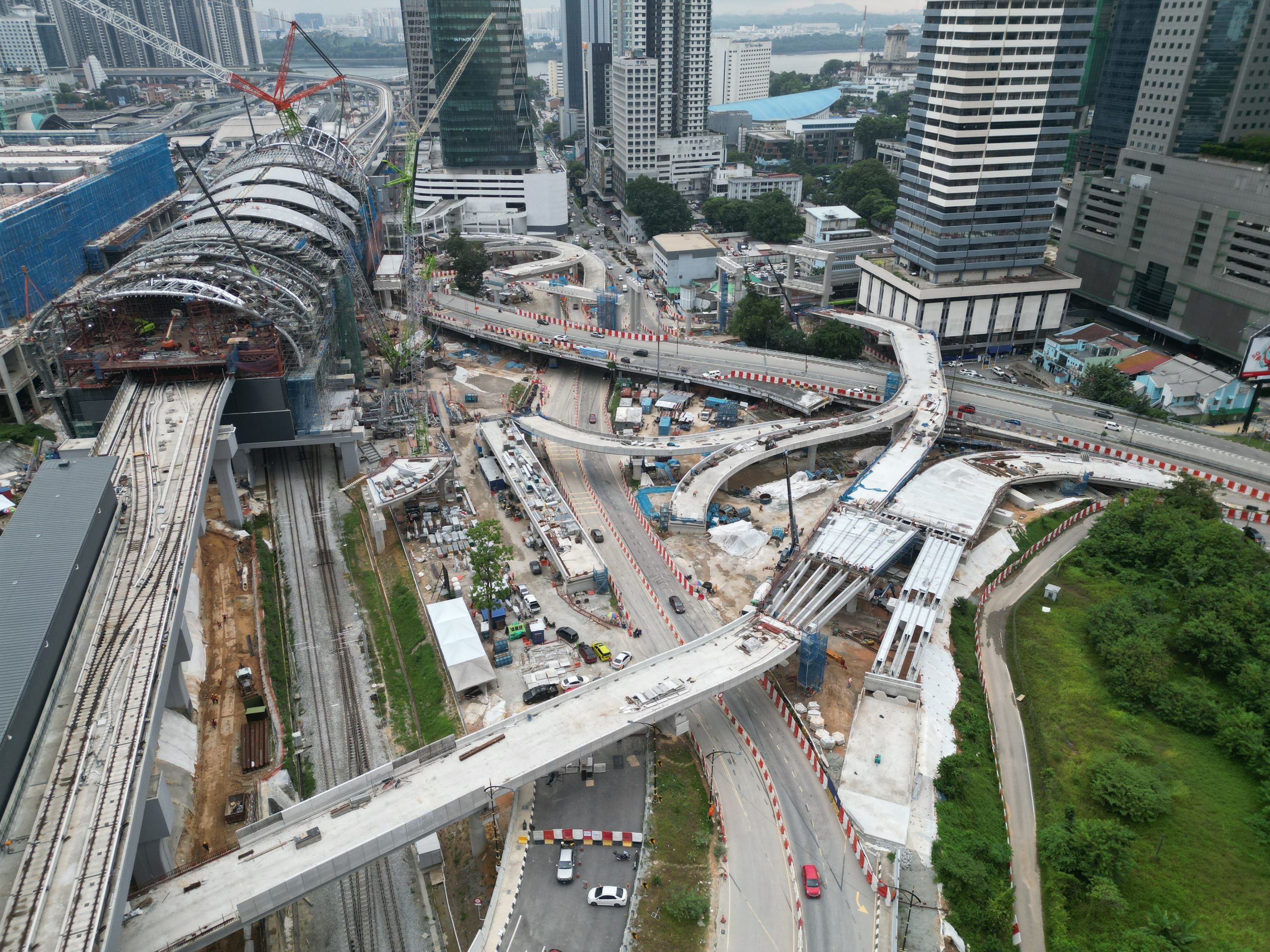
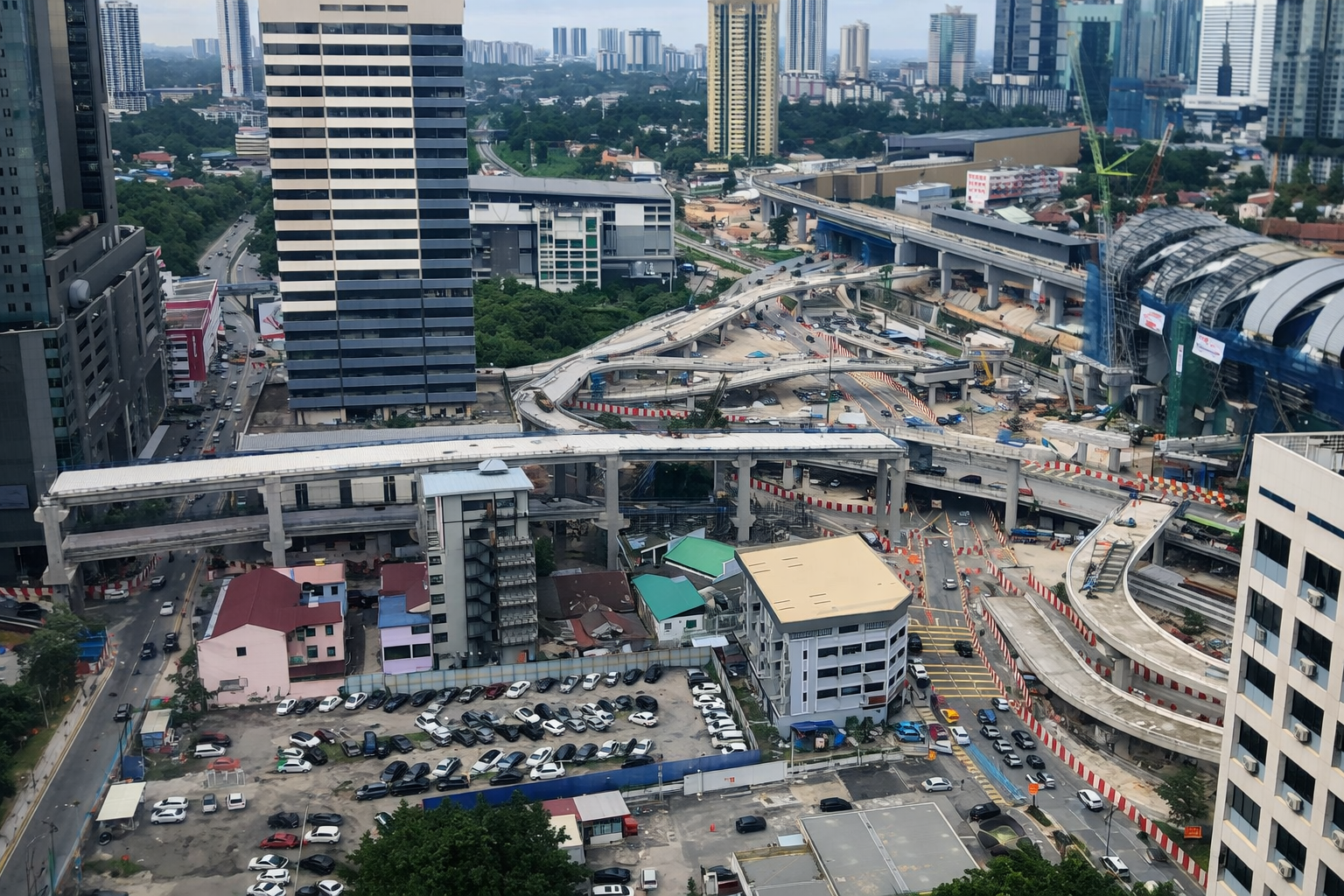
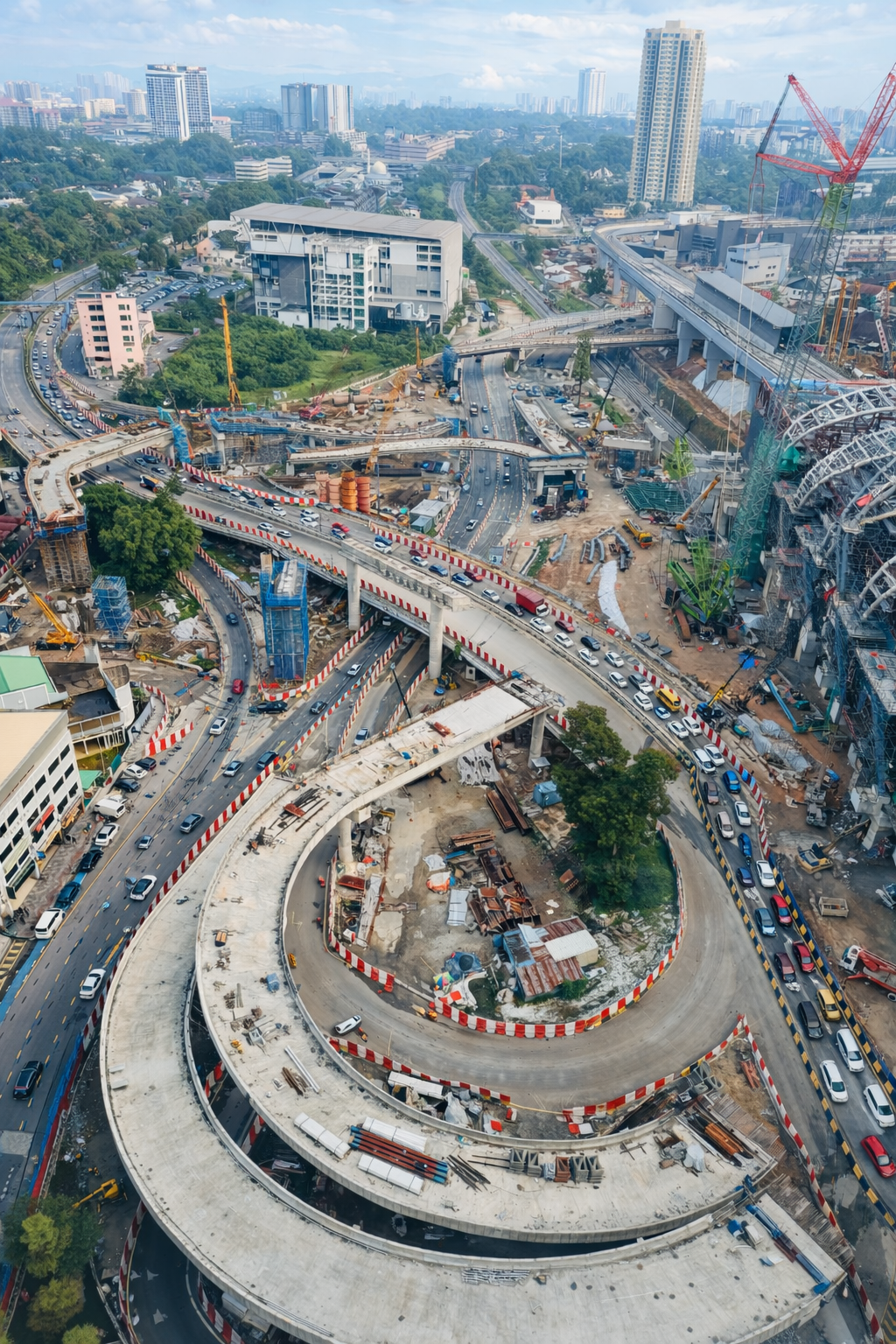
The proposed Johor Bahru–Singapore Rapid Transit System (RTS) Link Package 2B 8-Interchange and Traffic Dispersal Scheme development is engineered to seamlessly integrate with Johor Bahru’s primary urban arteries, including Jalan Tun Abdul Razak, Jalan Tebrau, and Jalan Wong Ah Fook, forming a comprehensive circulation network that connects directly to the Drop-Off/Pick-Up (DOPU) complex with an approximate total road length of 2 km. The project scope encompasses extensive highway, bridge, geotechnical, infrastructure and electrical engineering works, including the construction of interchanges, ramps and new link roads to improve direct access to the DOPU zones, widening of existing carriageways to increase lane capacity, pavement strengthening and rehabilitation to accommodate higher traffic loading, and upgrading of traffic control infrastructure such as directional signage, road markings, guardrails, and signalization systems. Additional components include geometric realignment where necessary to improve sight distance and turning radii, stormwater management enhancements to manage stormwater runoff, and integration with pedestrian pathways and public transport interfaces. Collectively, these interventions are designed to distribute vehicular inflow and outflow across multiple access points, thereby mitigating bottlenecks, optimizing traffic dispersion, and reducing congestion around the complex. By increasing network redundancy and improving road hierarchy efficiency, the interchange enhances overall traffic management performance, safety standards, and long-term transportation resilience within the surrounding urban corridor.
Technical Description
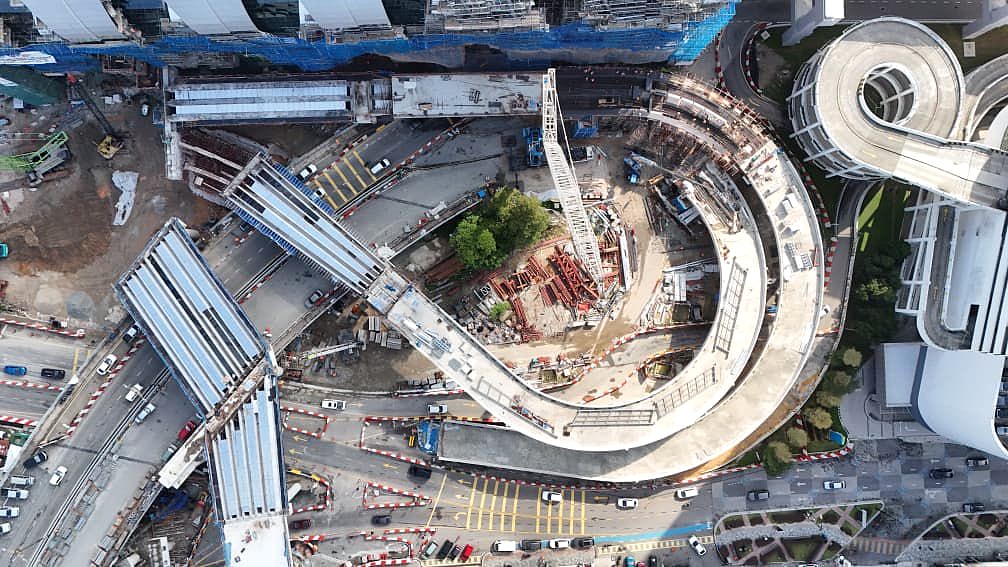
EDP Consulting Group Sdn. Bhd. was involved in providing consulting engineering for a list of comprehensive bridge, highway, civil infrastructure, geotechnical and electrical engineering services for Johor Bahru–Singapore Rapid Transit System (RTS) Link Package 2B: 8 – Interchange, Iskandar International Business District (IIBD) and Traffic Dispersal Scheme. The 8-interchange and IIBD ramp structures are generally conceived as reinforced and prestressed concrete bridge systems designed to accommodate normal vehicular roadway traffic in accordance with BD 37/01 – Loads for Highway Bridges. The superstructure is designed for HA type normal highway loading, representing distributed vehicular live loads, and 45 units of HB loading to cater for abnormal heavy vehicle effects, ensuring adequate capacity under ultimate and serviceability limit states. Structurally, the decks are predominantly simply supported configurations for straight spans. Cast in-situ reinforced concrete spine beams for curved spans. Precast prestressed beams mainly by pre-tensioned U-beams and post-tensioned T-beams. For curved ramps with a plan radius of less than 150 m, a semi-integral cast in-situ reinforced concrete spine beam system is adopted to accommodate horizontal curvature effects. In these cases, a monolithic pier is provided at mid-span to improve continuity and structural stability, while end spans are supported on elastomeric or mechanical pot bearings to allow controlled rotational and thermal movement.
The precast prestressed beams range from approximately 20 m to 36 m in length, optimized for transportability, erection efficiency, and structural economy. Deck widths vary between 7.4 m and 12.4 m, depending on lane configuration, shoulder provision, and verge requirements, typically accommodating single or dual-lane ramp traffic with appropriate edge barriers and parapets. The deck slab is cast in situ over the precast beams to provide composite action to enhanced load distribution, reinforced concrete end diaphragm introduced between girders.
Substructure elements generally consist of reinforced concrete piers supported on single pile bents, with large-diameter cast-in-situ bored piles ranging from 1.8 m to 2.8 m in diameter. These deep foundation systems are designed to transfer vertical loads, lateral forces, and overturning moments safely to competent bearing strata, taking into account geotechnical conditions and potential differential settlement. The overall structural system is engineered to address bending, shear, torsion (particularly for curved alignments), dynamic vehicular effects, thermal expansion, creep and shrinkage of concrete, and long-term durability considerations. Material specifications, detailing practices, and construction methodologies are selected to ensure structural robustness, serviceability performance, and ease of maintenance throughout the bridge’s design life.

 Kuala Lumpur